Qyvandra
Free Kit
Free Kit
Couldn't load pickup availability
1. Problem Statement
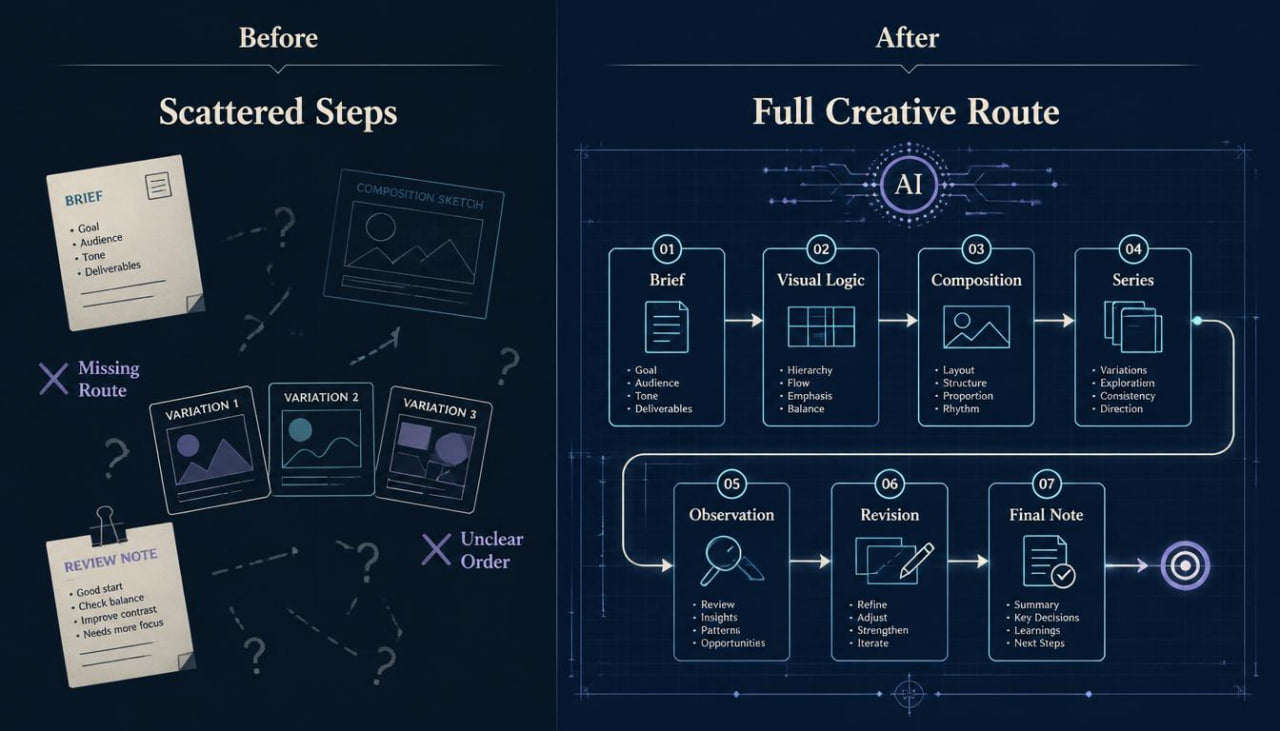
Many designers hear about AI but do not always understand how to apply it in creative practice without confusion or random steps. Learning materials are often fragmented: separate tips, scattered examples, and short explanations without a wider structure. Because of this, it can be difficult to understand where to begin, how to write tasks, how to evaluate generated ideas, and how to connect AI-based methods with personal design thinking. A designer may spend a lot of time testing different ideas without having a clear learning route that explains the basics in plain language. This is why an introductory set of materials is useful: it gives a calm start and divides AI for design into clear parts.
2. Solution
Free Kit is created as the first orientation point in the Qyvandra learning system. It introduces basic AI concepts for designers and explains the role of written tasks, visual analysis, reference thinking, and structured idea work. The materials avoid heavy terminology and guide learners through short explanations, examples, and practical exercises. This tier shows how AI can become part of a creative process rather than a replacement for personal vision. After completing this block, the learner receives a clear foundation for moving into the next Qyvandra tiers.
3. What’s Inside
Free Kit includes an introductory set of materials that presents the basic topics of AI for designers. The first section explains what AI means in the context of creative work: how it can help analyze ideas, create variations, build descriptions, find visual directions, and organize design thinking. There are no complex technical schemes here; the main focus is on how a designer can think in a structured way while working with new tools.
The second section focuses on writing tasks. The learner studies how to describe style, mood, composition, color logic, shape, texture, and the purpose of a future design piece. The materials show the difference between a vague request and a detailed creative description. For example, instead of writing a broad idea, the learner practices creating a clear formulation with context, details, and creative boundaries.
The third section explores visual thinking. It explains how to analyze references without copying, how to notice image structure, and how to identify a composition center, rhythm, contrast, and balance. This block helps learners better understand why some visual choices feel cohesive while others need more work.
The fourth section contains exercises for first practice. The learner works with short creative tasks: describe an imaginary brand, write a mood direction, prepare a text description for a visual concept, compare several idea variations, and identify strong and weak sides of a composition. Each exercise includes an explanation, an example, and space for independent work.
The fifth section is a mini glossary. It contains terms often used in AI design: prompt, reference logic, visual direction, concept brief, iteration, composition note, and style description. The explanations are written in plain language so learners can use them during further study.
The sixth section contains a short map of the next steps in Qyvandra. It shows how Free Kit connects with other tiers: Axis Set, Pulse Guide, Frame Module, and later learning blocks. This helps learners understand the full structure without pressure or inflated claims.
4. Who Is This For?
Free Kit is made for designers who are just starting to explore AI in creative work. It is also useful for those who have already seen separate AI design examples but want a more organized explanation of the basic principles. This tier is created for students, freelancers, visual content creators, beginners in graphic design, interface direction, branding, illustration, or general creative practice. The materials do not require technical preparation or knowledge of specific programs. The main requirement is a desire to describe ideas more clearly, analyze visual choices more carefully, and work with AI-based approaches as part of a personal creative process.
5. What You’ll Learn
- How to describe AI tasks clearly for a design process.
- How to write descriptions of style, mood, color, composition, and shape.
- How to separate a vague idea from a structured creative description.
- How to analyze references without direct copying.
- How to notice composition center, rhythm, contrast, and balance.
- How to create a short concept brief for a visual task.
- How to compare several idea variations using clear criteria.
- How to use basic AI design terminology during study.
- How to connect personal vision with AI-based approaches.
- How to prepare for more detailed Qyvandra modules.
6. Purchase Terms
For Free Kit, the terms are simple: this is a no-payment starter tier. When a learner later moves to paid Qyvandra tiers, those tiers may include a 30-day refund option according to the store terms. This approach lets the learner review the learning structure, evaluate the writing style, and calmly decide whether the further format fits their needs. All materials are described honestly: without inflated claims, pressure, or statements about specific personal outcomes. Qyvandra presents courses as learning resources for skill development, practice, and better organization of creative work.
Self-paced learning overview
- 📁 Digital file available after purchase
- 🗂️ Long-term availability
- 🔒 Secure checkout
- 🗓️ Content updated in 2026
Are the courses suitable for beginners in design and AI?
Are the courses suitable for beginners in design and AI?
Yes, the materials are built step by step. Each tier has its own depth, so learners can start with basic topics and gradually move toward more detailed tasks.
Do I need technical background?
Do I need technical background?
No, the focus is on design thinking, idea development, composition, visual logic, and AI-based approaches without naming specific programs.
Can I study at my own pace?
Can I study at my own pace?
Yes, the materials are created for independent learning. You can return to topics, exercises, and examples whenever it suits your study rhythm.
Share